
Table of Contents
Introduction
1. Why Digital Marketing Matters for Small Businesses
Key Statistics:
The importance of digital marketing cannot be overstated. According to HubSpot, 64% of marketers actively invest in SEO, and 53% focus on content marketing. Furthermore, 70% of consumers do online research before making a purchase. These figures highlight the significant role digital marketing plays in driving consumer behavior and business success.
Cost-Effectiveness:
One of the most appealing aspects of digital marketing is its cost-effectiveness. Compared to traditional advertising methods like TV or print, digital marketing offers better ROI. Small businesses can implement campaigns on a limited budget and still see measurable results, especially when leveraging strategies like SEO, content marketing, and social media engagement.
Relevance:
In today’s fast-paced world, having an online presence is critical. Consumers increasingly expect businesses to be accessible digitally. Whether they’re searching for information, products, or services, an effective online presence can help you connect with your target audience and build lasting relationships.
2. Building the Foundation for Digital Marketing Success
2.1 Define Your Goals:
Start by setting SMART goals. This framework ensures your objectives are Specific, Measurable, Achievable, Relevant, and Time bound. For instance, you might set a goal to “Increase website traffic by 20% in the next three months.” This clear target will guide your strategy and give you something concrete to work toward.
2.2 Identify Your Target Audience:
Understanding your audience is crucial for any marketing effort. Develop buyer personas based on demographics, interests, behaviors, and online activity. Utilize tools like Google Analytics to gather insights and ensure you’re targeting the right people with your marketing efforts.
2.3 Optimize Your Website:
Your website is your digital storefront. It must be mobile-responsive, fast-loading, and easy to navigate. Focus on on-page SEO elements like meta tags, headings, and content structure. A well-optimized website will help you rank higher in search engines and provide a seamless experience for users.

3. Key Digital Marketing Strategies for Small Businesses
3.1 Search Engine Optimization (SEO):
SEO is a long-term strategy that can help your business rank higher on search engines, making it easier for customers to find you. Leverage local SEO by optimizing your Google My Business listing and other online directories. Conduct keyword research to find terms relevant to your business niche and incorporate them into your content to improve visibility.
3.2 Content Marketing:
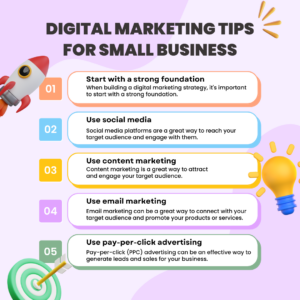
Content marketing is all about creating valuable, engaging content to attract and educate potential customers. Whether through blogs, videos, or infographics, providing high-quality content helps establish your business as an authority in your field. Consistently share actionable insights to build trust and loyalty with your audience.
3.3 Social Media Marketing:
Social media platforms like Instagram, Facebook, and LinkedIn are essential tools for small businesses to engage with their audience. Choose platforms that align with your target demographic and post consistently. Engage with followers by responding to comments and messages to create an interactive online community.
3.4 Email Marketing:
Email marketing allows you to connect with potential customers directly in their inboxes. Build an email list by offering lead magnets such as free resources or discounts. Personalize your email campaigns and automate follow-ups to keep your audience engaged and drive conversions.
3.5 Pay-Per-Click (PPC) Advertising:
PPC ads, whether on Google or social media platforms, are an excellent way to drive immediate traffic to your website. Set a clear budget and target specific audience segments to maximize the effectiveness of your ads. Track your ROI to ensure your ad spend is delivering optimal results.
4. Tools to Enhance Your Digital Marketing Efforts
To streamline your digital marketing efforts, consider using the following tools:
SEO Tools: Ahrefs, SEMrush for keyword research and competitor analysis.
Content Tools: Canva for design and Grammarly for ensuring error-free copy.
Social Media Tools: Hootsuite, Buffer to schedule posts and track engagement.
Analytics Tools: Google Analytics, Hotjar for understanding user behavior and optimizing performance.

5. Common Mistakes to Avoid
As you implement your digital marketing strategies, avoid these common pitfalls:
Ignoring Analytics: Failing to track your results means missing valuable insights. Regularly review data to adjust your strategies.
Overspending on Ads: Without monitoring ad performance, you could overspend without seeing desired results.
Neglecting Mobile Optimization: With more consumers browsing on mobile, a mobile-friendly website is essential.
Broad Targeting: Narrow your audience focus. Instead of trying to appeal to everyone, tailor your message to a specific segment for better engagement.
6. Measuring Success and Adjusting Strategies
6.1 Track Key Metrics:
Key performance indicators (KPIs) such as website traffic, conversion rates, and customer acquisition costs will help you gauge the success of your campaigns.
6.2 Use Analytics Tools:
Leverage tools like Google Analytics and Hotjar to understand user behavior, track performance, and identify areas for improvement.
6.3 Continuous Improvement:
Digital marketing is not a set-it-and-forget-it endeavor. Use A/B testing to refine your ads, emails, and landing pages. Experiment with different tactics to continuously improve your results.
Conclusion
Digital marketing offers small businesses an incredible opportunity to compete and grow in the online space. By implementing these strategies step-by-step, you can maximize your visibility, attract your ideal audience, and achieve measurable success. Start applying these techniques today and watch your business thrive in the digital era
Frequently Asked Questions: Digital Marketing Strategies for Small Businesses
Digital marketing is essential for small businesses because it provides cost-effective ways to reach a larger audience. With a well-executed strategy, small businesses can compete with bigger players in the market. It helps increase visibility, build brand awareness, and drive measurable growth while remaining within budget.
To determine the right digital marketing strategy for your business, you need to define your goals, understand your target audience, and assess your available resources. Start by focusing on the channels where your audience is most active—such as social media, email, or search engines—and tailor your efforts accordingly.
The time it takes to see results from digital marketing varies depending on the strategy. SEO typically takes 3-6 months to show significant results, while PPC campaigns can drive immediate traffic. Social media and content marketing can show results within a few weeks, but sustained growth takes time and consistent effort.
t
To get started with digital marketing, you’ll need tools for SEO (like Ahrefs or SEMrush), content creation (Canva, Grammarly), social media management (Hootsuite, Buffer), and analytics (Google Analytics, Hotjar). These tools will help streamline your efforts, measure performance, and enhance the effectiveness of your strategies.
Yes! Digital marketing allows small businesses to level the playing field. By targeting niche audiences, optimizing their websites for SEO, leveraging content marketing, and engaging in social media, small businesses can achieve significant results. With the right approach and consistent effort, even businesses with limited resources can compete effectively in the digital space.